Watching open country for elk can be difficult. Not because there is a lack of large basins, but because every fold in the ground looks like it could hold animals. Scanning these areas hastily can wear on the eyes, and oftentimes the scan will reveal nothing but glare. But by taking the time to glass these areas in a methodical and repetitive manner, one can begin to see similarities between areas, and make responsible decisions as to where to direct one's time. Start with the basin's natural divisions
Before you put your binoculars to your eyes, take a minute or two to study the terrain without them. Identify the main basin of the area and then the various side draws. Note the location of finger-like patches of timber and the various benches and rock bands within the area. Also note the travel breaks or locations where animals often change direction.
Divide up the view in front of you into sections to search, starting from the left or right side. A ridge crest, isolated tree, a drainage cut, or even a color difference can make good boundaries. Work your way through to the end of the section and then return to it for a closer look if necessary. Remember to go through the sections in the same order so another can follow along or even see for themselves what you have found.
Remember a grid is not set in stone. When you find an animal to scan, mark the spot where you last saw it and continue your search of the remainder of the section. If upon closer inspection you find that what you thought you saw was just a shadow or a branch to blow in the wind, then go back to the last landmark you had scanned and continue your search of that section. Search for shape, shade and small movement
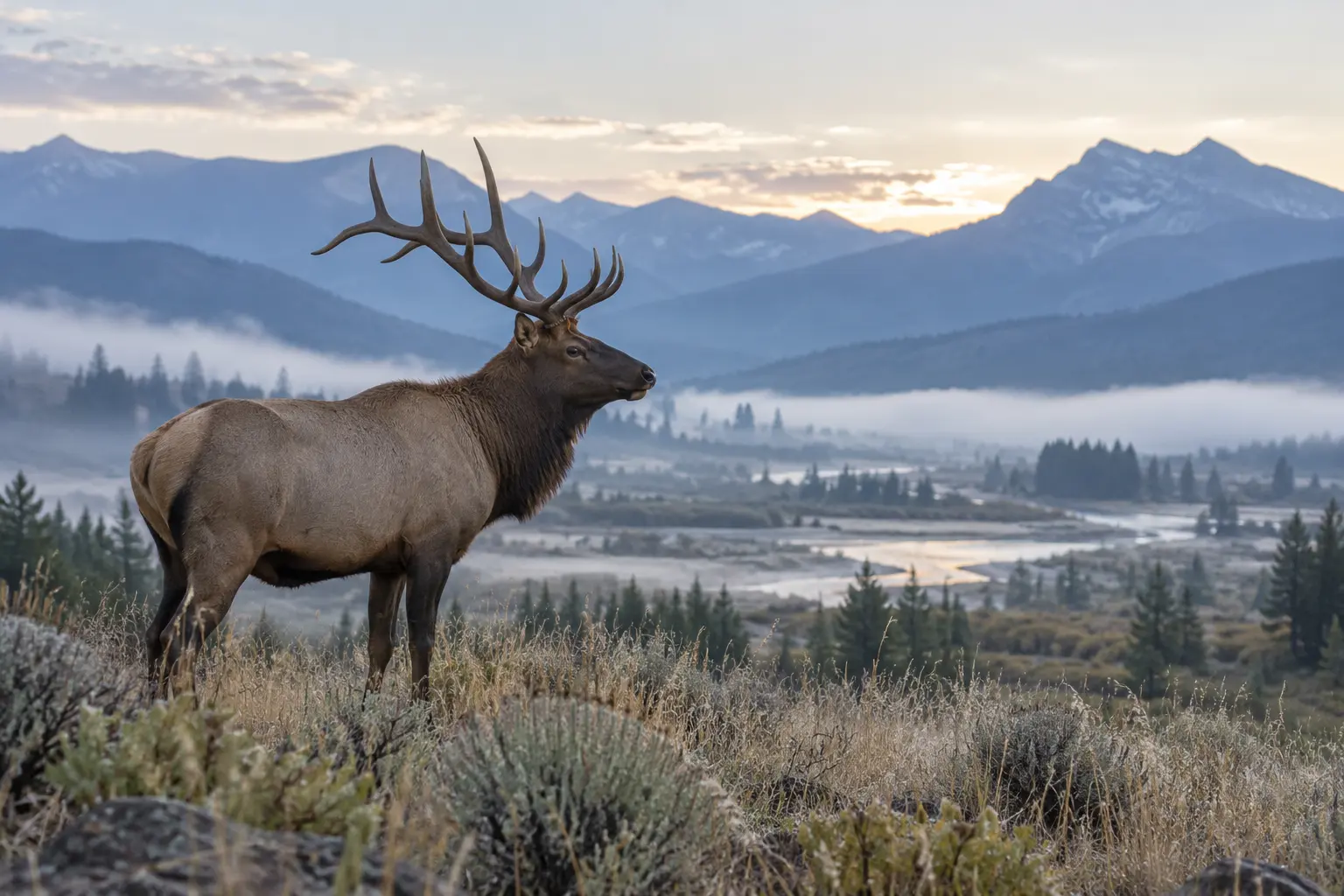
Elk rarely stand in the open to alert you to their presence. Most of the time they are hanging in the shade of trees or other cover. In desert country like sage, elk will often be standing with their backs to a sage edge. Timbered areas have elk that are lying horizontally in the dark of the trees. Also, look for small movements such as an ear flick.
In the early stages of searching open country it is best to first observe with the naked eye. As you view the area with your glasses, be careful not to get stuck on a high contrast area. Look for differences in lines and textures, such as a straight back on an irregular surface, or a dark object in a shade that does not seem to belong in that area. Also look for repeated movement in the same location.
Don't mistake color for shape. A tree, rock, cattle, brush, and elk all have their respective shades of color and often appear in the same hue in the desert. Instead look for legs, the body's angle, antlers, animal behavior, or even just a mass. Note that a mass can still be an animal but don't guess at what it could be. Keep watching until you have more definitive information. Let light and heat set the pace
Early and late light can reveal movement and help to identify shape but, as with everything, low angles can create long shadows which can make viewing difficult and also create glare. As the day progresses the bright slopes can wash out but the shaded timber will become easier to view. Try and view from a different angle to avoid viewing through glare.
Changing light and heat of the day can affect viewing of subjects far away. When the ground is to be warmed by the sun, it can start to shimmer and create the impression of movement of edges of objects on the far side of slopes of light colored material, such as sage. Areas of timber in shade can become more visible as the sun climbs in the sky. Turn to and away from subjects to relieve affects of glare and heat. Allow time for views to change. Short periods of time away to view from different angles can reveal much that was not apparent previously.
Before you move on, try to give some thought to what you've been looking at and write it down. Make sure you have a map to help you find your way back to the area you've been searching. As you move on to a new area, try to give your eyes a break to help avoid fatigue. Keep in mind that the time you spend searching will have to be offset against the time you spend making a less-than-informed decision later on. Make the optics stable before making them powerful
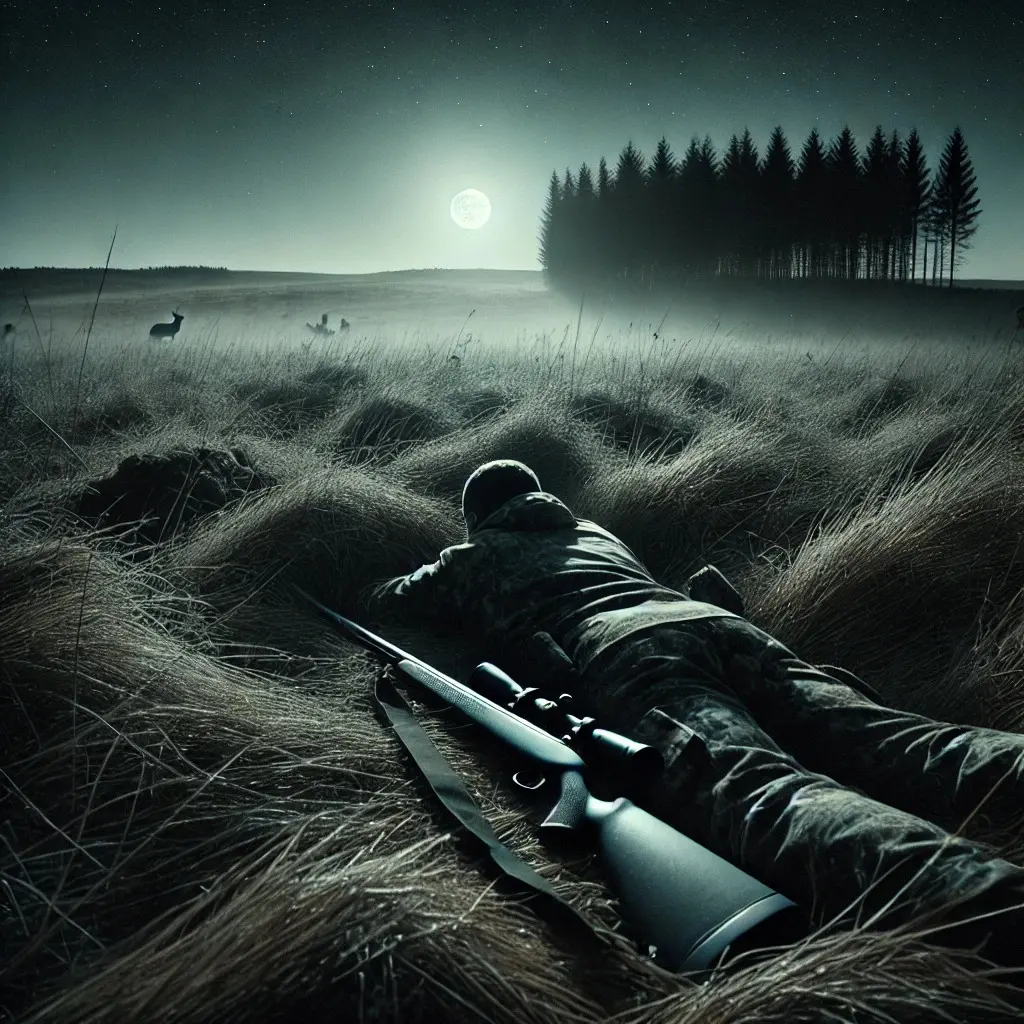
The view through your optics will also be affected by your body position. Sit with your back straight or lie on your back with your elbows under you to support your arms. If you have a pack on, use it for support. A compact tripod-mounted spotting scope can be very useful for long periods of time to inspect animals in great detail. Binoculars are best for searching for animals over a wide area and are usually much handier than a scope for quickly repositioning to scan more area.
It's also good to make sure that your lenses are clean before the search and that you have sufficient focus for your viewers before you are going to take long periods of time to look at things. Remember that a subject viewed in a wide angle will appear different than a subject viewed with high magnification. So take the time to confirm your findings when switching between your binoculars and a spotting scope.
One of the main trade-offs in terms of detail and coverage is that higher powered optics give one a very narrow field of view. To get any benefit from having searched a given area using higher powered optics one must be able to re-locate the landmark from which one began to search that area. Confirm before you communicate or move
Any location where you believe you have found elk needs to be described in terms of terrain feature(s) i.e. the left side of a drainage, below a broken rim, beside a timber finger, above a distinct rock band, etc. Your guide should be able to reference a fixed point in the terrain feature(s) and you can then describe whether or not you saw movement, a silhouette, full animal, etc. Note that descriptions of "over there" will not be sufficient to allow others to know where you are talking about in a basin of similar folds of terrain.
It's best to let your guide verify any sighting you think you have made. Your guide will likely know of the safest route to take to get to the animals and will also know of any boundaries (posted or otherwise) as well as other hunters in the area. He or she can also determine whether or not it is best to leave the animals alone. Be very sure of species, sex, number and distance before attempting to shoot. Remember, that uncertain sighting you had of a possible elk is better than shooting at nothing for certain.
Wait for a natural pause in your scanning of the possible sighting and then go back for a closer look at it in relation to the surrounding terrain. Also pay close attention to the animal's behavior. If after further observation you are still unsure of your identification then mark the location of your possible sighting and continue your search. Keep the search responsible and repeatable
Keep your search organized by establishing a plan and try to keep your noise, movement and party size to a minimum. Do your best to respect posted boundaries and understand the current regulations prior to your hunt. Your guide can help to interpret the current conditions of the field but each hunter is ultimately responsible for ensuring that they are hunting legally and ethically.
Remember, a good hunting session is not always to harvest an animal. Finding out how many animals are in a basin and getting a good understanding of the terrain are good outcomes as well as having the opportunity to come back another day. As you make your way through a search of the basin, remember to grid the ground, manage the light, keep you optic steady and record what you found out. In the end these simple habits will make your hunting of elk more sensible, safer and better for the land on which you hunt.